

2·
25 minutes agoTowns named after Native American tribes is fairly common in the US.
History Major. Cripple. Vaguely Left-Wing. In pain and constantly irritable.
Towns named after Native American tribes is fairly common in the US.
deleted by creator
Biden is going to be remembered similarly, for appointing a conservative AG who slow-walked the prosecution of Trump and let the traitor get off. In the long run, nobody’s going to give a shit about his “accomplishments” (Inflation Reduction Act, etc.) compared to that.
Yeah. When you lose the republic, it overshadows any middling reforms you pushed.

GIANT tracts of land!
Well, France was also Catholic and nominally should have respected the agreement (but didn’t)
and Spain got the rest of Latam and the phillipenes. seems accurate.
Well, they were supposed to get ALL of North America and the Caribbean, but a couple of other Europowers muscled in
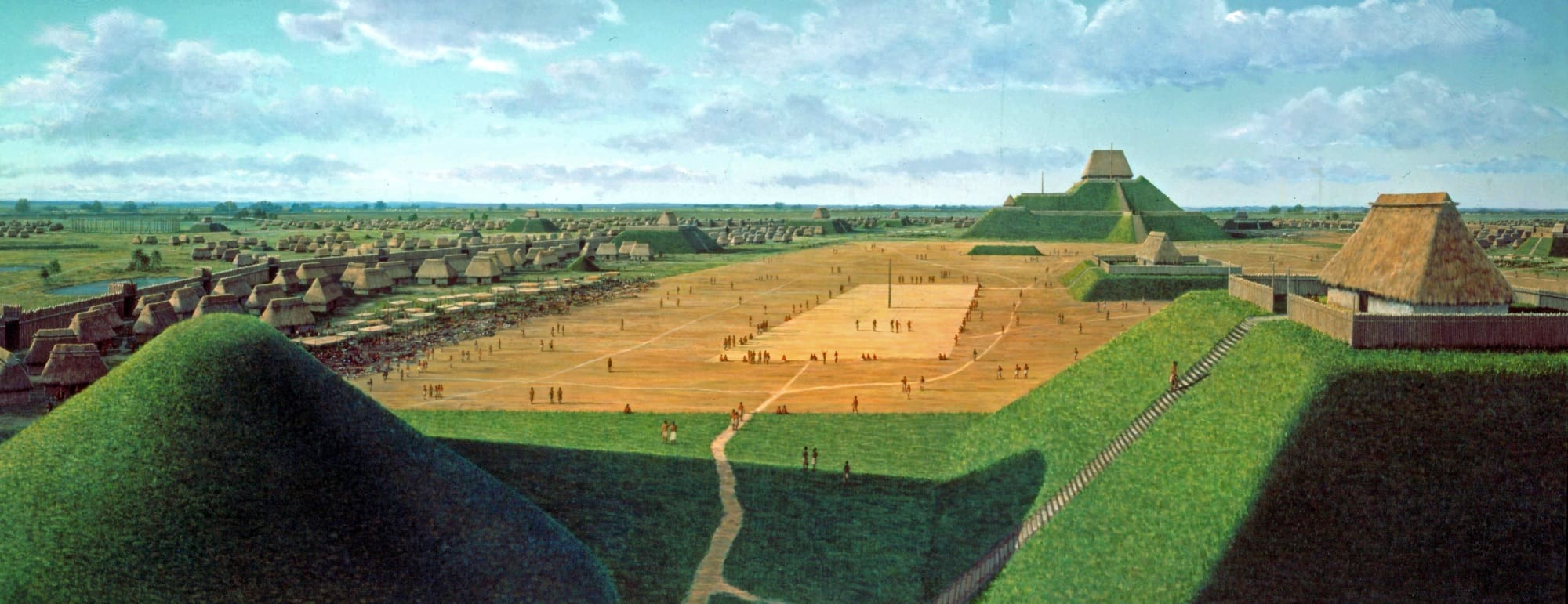
There are some visual similarities, but so far as I know the Mississippian culture developed pretty independently from Mesoamerican civilizations.
Regardless, such massacres remain the responsibility of organized institutions to avoid; blaming the enemy, however culpable they may be for the circumstances, is not sufficient to absolve the institution of blame. When your civilian casualty ratio is 80%-95%, something has gone very fucking wrong that goes far beyond mere bad circumstances. Fuck, man, WW2’s civilian casualty ratio wasn’t that bad. Vietnam’s civilian casualty ratio wasn’t that bad. In Iraq and Afghanistan, the US hit 15%-20% civilian casualty ratio, and that was widely considered reckless at best.
When a purportedly professional military ends up killing 5 times the number of civilians as militants, that’s a moment to step back and fucking reflect, or else implement reform, not plead that it was really tough and that they should get a pass just this once.
In April 2017 Justice Gurbir Singh stated that the army’s failure to provide any announcement to pilgrims before commencing Operation Blue Star was a human rights violation.[151]
The Indian army mistreated pilgrims who were detained immediately after the fighting stopped on June 6 by failing to provide them any water. Some pilgrims were reduced to collecting drinking water from the canals that contained dead bodies and were filled with blood.[237]
Ragi Harcharan Singh stated that on June 6 the Indian army gave its first announcement for evacuation since the commencement of Operation Blue Star. Singh states that he witnessed hundreds of pilgrims, including women, being shot at by the army as they emerged from hiding.[52]
A female survivor witnessed Indian soldiers line up Sikh men in a queue, tie their arms behind their backs with their turbans, beat them with rifle butts until they bled and then executed by being shot.[238][154]
Giana Puran Singh stated he along with 3–4 others were used as human shields for the protection of an officer who wanted to inspect the inside of the Darbar Sahib for anyone using a machine gun.[239]
A member of the AISSF stated that on June 6 those who surrendered before the army were made to lie down on the hot road, interrogated, made to move on their knees, bit with rifle butts and kicked with boots on private parts and their heads. The detainees were made to have their arms tied behind their backs with their own turbans and denied water. At about 7:00 pm the detainees were made to sit on the Parikrama near the army tanks. Many were injured as there was still firing from the side of the Akal Takht.[239][154]
Post-mortem reports showed that most of the dead bodies had their hands tied behind their backs, implying they had died after the army assault and not during. These bodies were in a putrid state at the time of post-mortem as they had been exposed in the open for 72 hours before being brought in.[53]
The Red Cross was stopped from aiding the wounded civilians by the army.[240]
Punjab officials who visited after the Operation complained to the army of 6 cases of rape during the Operation by soldiers that they had heard of.[241]
I have no doubt there were professionals present who were just trying to do their job, and imagined this as a mop-up operation for separatists, and their experiences and what they saw their comrades do are not invalid. But certainly, neither are the accounts of the Indian Army veterans and civilians who saw and reported horrors performed invalid. And of the two, “I didn’t see anything happen” and “I saw some shit go down” are not inherently contradictory; not seeing something happen in your little corner of the operation is sure as shit not the same as a blanket statement of good conduct (or, even if the conduct of the Indian Army was spotless, the horrific timing and planning by Indira Gandhi’s government for the operation)

“We can sail all around the Mediterranean in our ships and not drown” uh okay we can survive just long enough to destroy you and then have the entire fleet destroyed in a storm and conscript another 10,000 citizens for the glory of Rome 💪💪💪💪💪
Explanation: Despite Rome’s extremely aggressive posture, it actually took a great deal of effort to justify its wars, at least to itself.
This seems unremarkable, but the consistency with which it was regarded is somewhat unusually in the ancient world - while rulers like Cyrus the Great and Alexander the Great based their conquests on divine right and the notion that the conquered belonged under their rule, Rome had a very legalistic approach to warfare that demanded just cause.
Of course, Rome was extremely opportunistic and warlike, so what that really amounted to was a little bit of diplomatic snooping for a cause that might be helpful. Rich foe has a weak neighbor? ‘Befriend’ that neighbor and then use any insult as a pretext to defend a ‘friend of Rome’! Roman citizen got punished ‘too harshly’ for a little bit of innocent crime and grifting? Demand reparations, and then declare war if they aren’t provided! Polity violated Clause III Subsection B of their last treaty, according to an extremely legalistic and literal interpretation of the text? Time to loot their cities and sell them into slavery!
The Romans themselves regarded this somewhat seriously - when one of the most powerful (and unambiguously the richest) men in Rome, Crassus, went off to fight Parthia, the suspicion that Parthia, rich and powerful and foreign and threatening though it was, had done nothing wrong was enough to raise the ire of the citizenry, and a prominent citizen went so far as to call down a curse of the gods upon the entire expedition for being an unjust war! It worked, apparently, since Crassus suffered a humiliating defeat and was killed by Parthian troops. Likewise, in Roman Imperial histories, Emperors are routinely praised or condemned for how ‘just’ their wars seems to be, separate from the success or failure of the venture.
Explanation: Despite Rome’s extremely aggressive posture, it actually took a great deal of effort to justify its wars, at least to itself.
This seems unremarkable, but the consistency with which it was regarded is somewhat unusually in the ancient world - while rulers like Cyrus the Great and Alexander the Great based their conquests on divine right and the notion that the conquered belonged under their rule, Rome had a very legalistic approach to warfare that demanded just cause.
Of course, Rome was extremely opportunistic and warlike, so what that really amounted to was a little bit of diplomatic snooping for a cause that might be helpful. Rich foe has a weak neighbor? ‘Befriend’ that neighbor and then use any insult as a pretext to defend a ‘friend of Rome’! Roman citizen got punished ‘too harshly’ for a little bit of innocent crime and grifting? Demand reparations, and then declare war if they aren’t provided! Polity violated Clause III Subsection B of their last treaty, according to an extremely legalistic and literal interpretation of the text? Time to loot their cities and sell them into slavery!
The Romans themselves regarded this somewhat seriously - when one of the most powerful (and unambiguously the richest) men in Rome, Crassus, went off to fight Parthia, the suspicion that Parthia, rich and powerful and foreign and threatening though it was, had done nothing wrong was enough to raise the ire of the citizenry, and a prominent citizen went so far as to call down a curse of the gods upon the entire expedition for being an unjust war! It worked, apparently, since Crassus suffered a humiliating defeat and was killed by Parthian troops. Likewise, in Roman Imperial histories, Emperors are routinely praised or condemned for how ‘just’ their wars seems to be, separate from the success or failure of the venture.
Explanation: Indira Gandhi was the prime minister of India during two periods, once in the 70s and once in the 80s. In both periods she displayed a concerning level of authoritarian inclination, though India’s democracy ultimately proved robust enough to survive both of her administrations. In her second administration, she initiated a deeply controversial military operation against Sikhs seeking self-determination, which turned into a massacre.
Her intelligence service, wisely if not morally, removed Sikhs from her personal bodyguard unit after this event.
She immediately reinstated them.
A few months later, some of those same Sikh bodyguards would assassinate her, in no small part in retaliation for the massacre of Sikhs during the aforementioned operation.
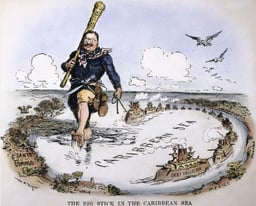
Explanation: When the Americas were first discovered, the Pope split the newly-exploitable world between Spain and Portugal
This didn’t last, and wouldn’t have applied to Greenland (which was already known) anyway, but it’s a stronger claim than whatever the fuck the current US administration is going on about.
Explanation: When the Americas were first discovered, the Pope split the newly-exploitable world between Spain and Portugal
This didn’t last, and wouldn’t have applied to Greenland (which was already known) anyway, but it’s a stronger claim than whatever the fuck the current US administration is going on about.
Explanation: James Buchanan was the last president elected before the US Civil War. He is widely considered to have been one of the worst presidents in our history, with his blatant Southern slaver sympathy emboldening the slaver cause, while simultaneously infuriating the anti-slavery North. When the Southern states seceded, he placed the blame on the North for ‘provoking’ the slavers into attempting to murder their way into a perpetual slaverocracy.
Fuckwit.
Explanation: The Roman Emperor Septimius Severus, a mixed-race man from North Africa, was known for his… soldierly way of dealing with problems. That is to say, violence was always an option. While also renowned for his cunning, his lack of love for luxury, and his cultured outlook, Severus always seemed to be fond of returning to the “I have the sword and you don’t” method of rulership.
Notably, near the end of his life, he embarked on a hybrid exploration-conquest of Caledonia - roughly modern-day Scotland. Supposedly, he reached the northern edge of Britannia and took astronomical measurements. As had happened several times before, the Caledonians met the Romans in battle essentially once, and then decided to hell with it - and scattered into the rough terrain of Scotland. Rather than a Roman victory, this was the start of guerilla warfare, wherein Roman scouting and foraging parties would be ambushed when detached from the Roman army and (ideally) eliminated.
This method of warfare so infuriated Severus that he swore to exterminate the Caledonians, down to the last man, woman, and child.
His two sons, in perhaps the only wise move either of them ever made in their lives, decided not to waste their time attempting to genocide Scotland, and abandoned the campaign immediately after Severus passed away from illness.














Don’t try sicide