
Nee, Nietzsche war da schon lange tot. Der hat glaube ich eher so 1874 in der Nationalmannschaft gespielt, aber hier geht’s um 1974
optional
- 36 Posts
- 1K Comments
Joined 2 years ago
Cake day: June 22nd, 2024
You are not logged in. If you use a Fediverse account that is able to follow users, you can follow this user.

 33·4 days ago
Da hat sich ein Fehler in der Überschrift eingeschlichen. Eigentlich muss es heißen: “Politische Mitte wendet sich von junger Generation ab”.
 1·8 days ago
That was basically the idea of flattr. Pay a fixed amount per month, whenever you read an article you like click the flattr button and at the end of the month the money is divided equally among all your button clicks.
Sadly, with the downfall of the blogosphere it lost traction and ended operations in 2024.
The only thing I always found a bit problematic was, that a 20 word tweet would get the same share as a 2 hour podcast or a 20,000 word investigative article.
 11·8 days ago
Behauptet der Artikel ja auch nicht.
Wenn ich mich zwischen Marmelade oder Nutella entscheiden müsste, würde ich wohl die Marmelade wählen, da Nutella zusätzlich zum Zucker noch sehr fettreich ist
Beide enthalten ca. 50% Zucker, Nutella enthält aber zusätzlich noch 32% Fett, der Großteil davon billiges gehärtetes Palmfett.
Der Artikel empfiehlt sogar explizit gesünderes Nussmus, das sogar einen viel höheren Anteil an Fett hat, aber eben tendenziell gesündere Fette und auf die riesige Menge Zucker verzichtet.
 6·9 days ago
Na gut, dass jetzt nach Milka der zweite große Schokoladenhersteller sich unkaufbar macht. Ist eh besser für die Figur und den Geldbeutel.
 111·11 days ago
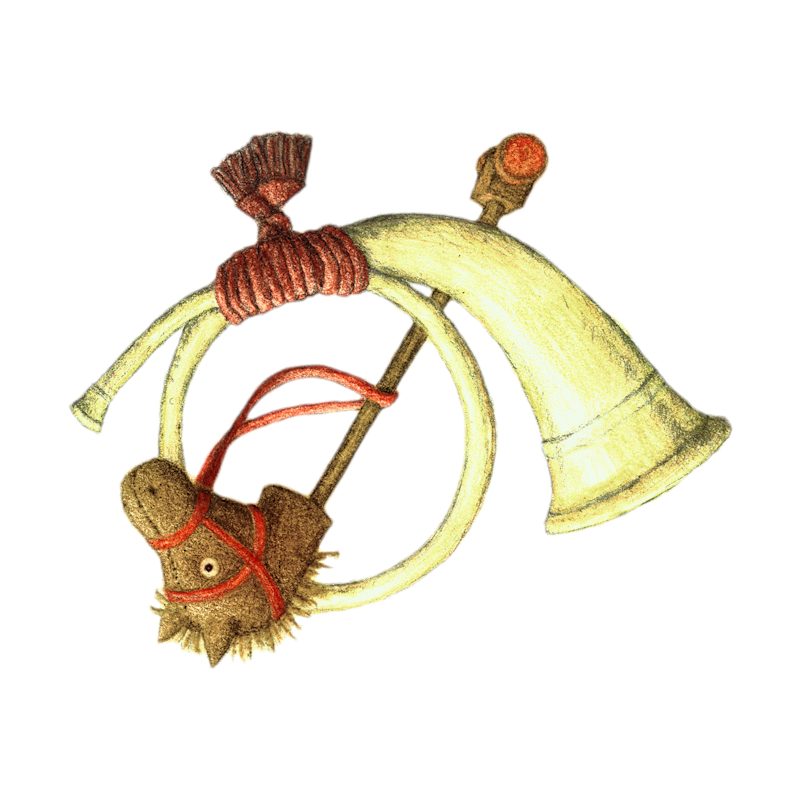
Dass Heino ein Ewiggestriger und genauso schwarz-braun wie seine Haselnuss ist, überrascht mich jetzt nicht wirklich. Aber dass das rechtlich so funktioniert, erstaunt mich dann doch. Ich kann also als Schauspieler in einem Film mitspielen, mit Vertrag und allem und dann im Anschluss verbieten, dass der ausgestrahlt wird, weil mir irgendeine Kleinigkeit nicht gefällt?
Das würde ich ja als Produzentin mal von einem Gericht klären lassen, ob Heino dann nicht wenigstens Schadensersatz zahlen muss. Ob er dann immernoch so gegen einen Doppelpunkt kämpft, wenn er die Drehkosten oder fehlende Einnahmen erstatten muss?
2050 werden wir vielleicht einen Standort für das Endlager gefunden haben. Ein Lager haben wir damit noch lange nicht. Es muss ja erstmal genehmigt und über alle Instanzen durchgeklagt werden. Dann kann man vielleicht 2065 anfangen zu bauen und 2075 die ersten Behälter einlagern.
Das werde ich mit ganz viel Glück gerade noch miterleben. Und die Leute die das entscheiden sind bis dahin vermutlich auch nicht mehr am Leben, also kann es ihnen ja egal sein.

 31·14 days ago
issues with style, formatting and tracking changes
Microsoft has all these problems, and five more. It’s just that the users are accustomed to Microsoft’s issues and not willing to change.
I had so many issues with Microsoft’s software whenever I’m forced to use it, that it’s almost unbelievable how someone can use that shit without permanently hitting their head into the wall.
Den Schleudergang meiner Waschmaschine. Erinnert etwas an Einstürzende Neubauten.
 2·16 days ago
Meine Eltern hatten damals den Bildband “Ein Kind entsteht”. Und ich erinnere mich, dass ich mir das als Grundschüler mit einer Mischung aus Faszination und Ekel angesehen habe. Embryo s/Föten sind nämlich gar nicht mal so niedlich.

For English it’s true that calling it “the Ukraine” feels like you’re talking about a region instead of a country, because that’s the (historical) reason for the article. So in English “the” does have that implication.
In German however, we use the article for very different, purely grammatical reasons: Every noun in German has one of three gramatical genders, that have nothing to do with its physical nature. A pouch isn’t more male than a bag, but nonetheless, we say “der Beutel” and “die Tüte”. The same applies to country names. Some are male (der Iran), some are neutral (das Syrien) and some are female (die Türkei). And for countries that are neutral, you just leave out the article in almost every case1. It has nothing to do with wether something is a region or an independent country.
A good illustration of this: In German the same country can sometimes be refered to in two different ways with two different genders. “Die USA2” is female*, “Das Amerika” is neutral. So you would say “ich fahre nach Amerika” but “ich fahre in die USA”. Or an even more obvious case: The Netherlands are often called “Holland” in German, even though Holland is just one region in the Netherlands. But Holland is neutral and Niederlande female. So we say “ich fahre nach Holland” but “ich fahre in die Niederlande”. Here the country has the article, while the region does not.
1 In some cases the neutral article shows again. For example, if you’re talking about a specific version of a country: “Das Frankreich der 50er-Jahre” or “Das Spanien unter Franco”
2 The USA are female because they are plural, and every plural is female in German – “Der Mann” but “die Männer” – showing that gramatical gender has no physical reasoning.
 81·18 days ago
Und ich dummerchen dachte immer, das SM-Dilema wäre, dass man sich entscheiden muss ob Top oder Bottom. Lack oder Leder. Ketten oder Seile. Gerte oder Paddel.
Heise hat gestern aber auch eine taz-würdige Überschrift rausgehauen:

Und man braucht eine Karteikarte um zu wissen, in welche Schublade man die Kartei gesteckt hat.
Sag bloß, Du bist der Typ der bei der Gema die Titel eintippt‽
Und ein (fakebarer) Screenshot würde reichen um das alles auszulösen.
Die Lösung dafür steht ja im Prinzip schon im Artikel. Der Plattformbetreiber muss dazu gezwungen werden, die Bestandsdaten auf seine Kosten herauszugeben. Wenn ich neben einer Nachricht auf “melden” klicke und die Plattform feststellt, dass die Nachricht möglicherweise strafrechtlich relevant ist, könnte der Betreiber die Daten direkt an die Polizei/Staatsanwaltschaft schicken, oder mir eine signierte Datei mit Inhalt und Metadaten der Nachricht geben, mit der ich dann zur Polizei gehen kann. Fälschung quasi ausgeschlossen.
Mit Hausdurchsuchungen hätte ich in diesem Fall auch kein Problem; wenn jemand über Monate bedroht und belästigt ist das IMHO absolut angemessen. Jedenfalls mehr, als wenn jemand jemandem einmalig “Du bist so 1 Pimmel” oder “Schwachkopf” in die Kommentare schreibt.












Wenn Du keine Angst vor Monstern hast, ich finde die Bilder von https://www.zozoville.com/kalender/kalendarium_329_1338/ ganz schön.