Interesting. So, if they can‘t move, they would have to reproduce by sending pollen into the air or something similar. I wonder how they birth their offspring. They would have to eject them at high speeds to reach new areas.
So they either evolved to be parasitic by nature, or they rely on being pushed along by the growing pile of tribbles or they originate from a very windy world, where they move like tumbleweed.


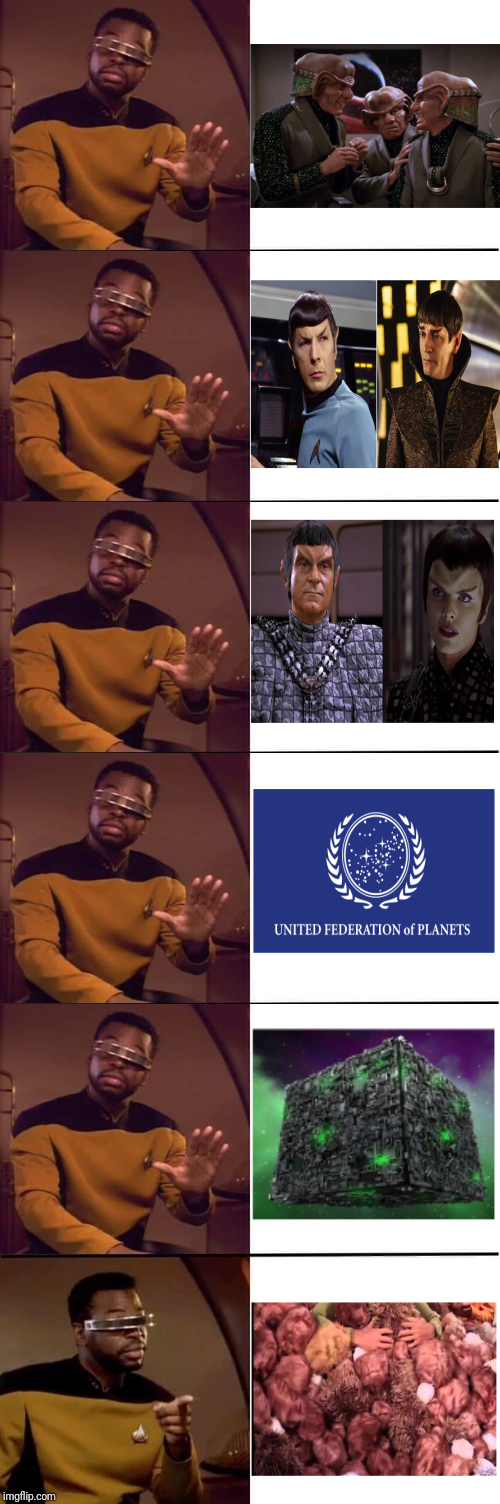
deleted by creator
Section 31 saw to that detail a century later. I’m sure some were eaten, but Klingon thinking is like a blunt instrument: simple and lacking nuance.
deleted by creator
Maybe there‘s just not much to eat with a tribble being mostly fur.
deleted by creator
How do they move?
deleted by creator
I love this community. Having in depth conversations about the edibility and biomechanics of troubles. Don’t change!
deleted by creator
deleted by creator
Interesting. So, if they can‘t move, they would have to reproduce by sending pollen into the air or something similar. I wonder how they birth their offspring. They would have to eject them at high speeds to reach new areas.
Do you know those animals like bees and some fish that copulate once for life?
It’s heavily implied that the tribbles do it once in several generations. So I imagine they do it when they get luck to be thrown together.
So they either evolved to be parasitic by nature, or they rely on being pushed along by the growing pile of tribbles or they originate from a very windy world, where they move like tumbleweed.
Oh, I vote on the tumbleweed option. It’s the most reasonable one.